
In this article
Tailor CV to job description is a simple instruction that many candidates misunderstand. A capable applicant can miss interviews because their CV does not present the right evidence in the right order. Recruiters and hiring managers make quick decisions. They need to verify key requirements within seconds, not read every line.
This article explains how to tailor CV to job description without exaggerating experience. It sets out ten practical techniques you can apply before you click submit. Each technique is drawn from what I have seen work, and what routinely fails, across UK and Middle East hires.
Recruiter perspective, how CVs are matched to a vacancy
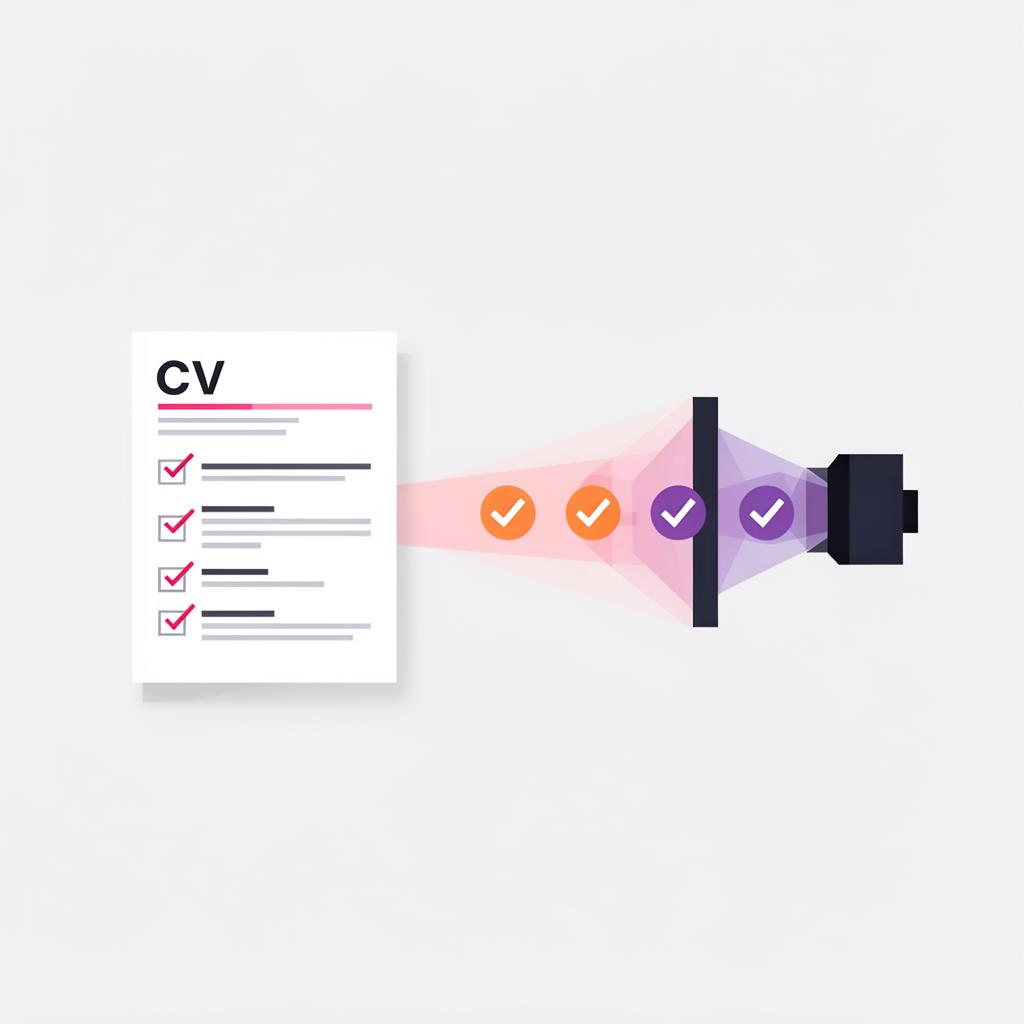
Recruiters compare a CV with three practical things, not a wish list. Essential requirements, core responsibilities, and clear evidence of results. Essential requirements must be obvious. Responsibilities must be matched with specific examples. Results make a candidate credible.
When screening, I scan for two things on the first page. One, evidence that the candidate has done the same or a closely equivalent role. Two, a recent achievement or metric that proves competence. If those are missing I will move on, even if the CV lists many general skills.
Applicant tracking systems matter, but only to a point. Readable formatting, accurate terminology, and sensible headings help your CV pass automated filters. There is no single keyword trick that guarantees an interview. Human reviewers still decide who progresses, and they favour clarity over cleverness.
Why candidates struggle to tailor their CVs
- One CV for everything. Candidates send the same document to different roles, so priorities are missed.
- Repeating the advert. Copying description wording without showing evidence fails the verification step.
- Burying strong examples. Relevant achievements are often hidden deep under older or irrelevant roles.
- Translating across sectors. Candidates with different job titles or industries struggle to explain transferable duties.
These problems are avoidable if you change emphasis and evidence, not the truth of your experience. Tailoring is about selection and ordering. It is not about invention.
Practical advice: 10 ways to tailor a CV to a job description
Apply these techniques in sequence. They require 20 to 60 minutes per application, depending on how close the roles are.
- Identify essentials and desirables first. Read the advert and mark must-haves separately from nice-to-haves. If a requirement is essential, put evidence of it on the first page.
- Find the employer’s top three priorities. From the responsibilities, choose the three things the role will be judged on day one. Place the strongest matching evidence near the top of your experience or profile.
- Rewrite the professional profile to name the role and show a result. Never leave the profile generic. State the target role, one or two strengths that match the essentials, and a short, verifiable achievement. Example: “Assistant Operations Manager with three years’ experience producing weekly performance reporting that reduced delays by 12 per cent.”
- Mirror the advert’s terminology accurately. Use the employer’s terms for skills, tools and processes you genuinely use. If the advert asks for “incident management”, and you performed that work, use the same phrase. Do not copy unfamiliar terms you cannot discuss.
- Reorder skills and tools. Put the most relevant, demonstrable capabilities first. If the role values stakeholder management, move that to the top of your skills list and add a one-line example beneath it.
- Rewrite experience bullets to connect actions and responsibilities. Each bullet should show what you did, how you did it, and the outcome. Focus on duties that map to the advert. Replace vague lines such as “responsible for reporting” with “produced weekly performance reports and presented findings to operations leads, prompting two process changes that cut exceptions by 9 per cent.”
- Quantify outcomes where possible. Use percentages, timeframes, headcounts, or savings when you can. When exact numbers are sensitive, give scope instead, for example “managed a 24-store region” or “handled a caseload of 50 weekly incidents”.
- Expand recent and transferable experience. If you are moving industry, expand the recent roles that demonstrate relevant tasks, such as complaint resolution, case management, supplier coordination or financial reconciliation. Shorten older, unrelated roles to one or two lines.
- Make mandatory items easy to spot. Qualifications, licences, eligibility to work, and location must be visible. Place them near the top or in a short certifications section so a recruiter can verify them at a glance.
- Final check against the advert. Before submitting, read the job description and tick off where the CV provides evidence for each essential criterion. Remove unsupported claims and simplify formatting so the key points are immediately visible.
Real world examples, turning generic experience into role relevant evidence
Below are typical before and after bullets that show how small changes improve clarity for a recruiter.
- Operations reporting, before: Responsible for reporting across the region.
Operations reporting, after: Produced weekly performance dashboards for a 10-site region, highlighted underperforming locations, and coordinated corrective actions that improved on-time delivery from 86 per cent to 93 per cent within three months. - Retail to customer support, before: Handled customer queries and complaints.
Retail to customer support, after: Resolved an average of 25 customer complaints per week, logging cases in the CRM, escalating 8 per cent to product teams, and achieving a 4.6 average customer satisfaction score. - Two applications for the same vacancy: Applicant A lists many skills copied from the advert but provides no recent metrics. Applicant B highlights three recent projects that map to the role, with timelines and measurable outcomes. Applicant B is easier to verify and more likely to be shortlisted.
See how your CV performs with recruiters
Upload your CV for a free review and get a score out of 100 based on ATS and recruiter expectations.
Actionable checklist, review your CV before applying
- Mark essential and desirable criteria in the job description.
- Show the strongest genuine matches on the first page.
- Link top priorities to specific experience, achievements or qualifications.
- Use employer terminology for tools and processes you actually use.
- Quantify outcomes or give clear scope when numbers are unavailable.
- Shorten unrelated older roles and expand recent transferable duties.
- Make mandatory qualifications and eligibility easy to find.
- Proofread, remove unsupported claims, and save a tailored copy for this vacancy.
Summary, make your match easy to verify
Recruiters do not expect a perfect match. They expect a truthful, well-ordered presentation that makes verification simple. Effective tailoring adjusts emphasis and evidence, not the facts. Prioritise the requirements a recruiter will need to check quickly, and put those items where they will be seen on first glance.
Get a free CV review
If you would like a second opinion, upload your CV for a free review. Automated tools can flag formatting and keyword issues, but an experienced recruiter will identify positioning and presentation problems that software often misses. A review will show where your CV reads well, what to change for a specific role, and how to present evidence recruiters can verify.
Prepare a tailored CV before your next application, and you will increase the chance of progressing to interview. If you want a recruiter perspective on one tailored version, request the free CV review and include the job advert you are targeting.
Common Mistakes
Copying phrases without evidence. Problem
recruiters cannot verify claims. Fix: attach a one-line example or result to each copied phrase.
Adding tools or qualifications you cannot discuss. Problem
you will be asked about them at interview. Fix: remove unsupported items or be prepared with a clear explanation and example.
Forcing every line to match the vacancy. Problem
useful context is lost and the CV reads oddly. Fix: keep some broader role context, but emphasise relevant duties.
Overdesigning the CV. Problem
graphics, unusual layouts and hidden text harm ATS readability and slow the recruiter. Fix: use a clean layout with clear headings and bullet points.
Tailoring only the profile. Problem
you may attract interest but fail at shortlisting because experience bullets still do not match. Fix: tailor the profile and at least the top two roles.
See how your CV is likely to be assessed in a competitive market.
Upload your CV and receive a structured recruiter review with a clear first read on positioning and fit.
See how your CV is likely to be assessed in a competitive market.
Upload your CV and receive a structured recruiter review with a clear first read on positioning and fit.