
In this article
Introduction
Many candidates use ready-made CV templates but still fail to secure interviews. A template can make a CV look neat, but recruiters do not hire on looks alone. They need evidence that a candidate can do the job, deliver results and fit the team. Candidates who rely on attractive layouts without clear content risk being passed over within the first 30 seconds of a scan.
Choosing the right CV example matters because it shapes how your experience is read. The correct example steers attention to relevant roles, measurable achievements and evidence of progression. The wrong example hides those things behind graphics, columns or vague statements, which costs interviews and opportunities.
Recruiter Perspective: What Makes a CV Template Effective
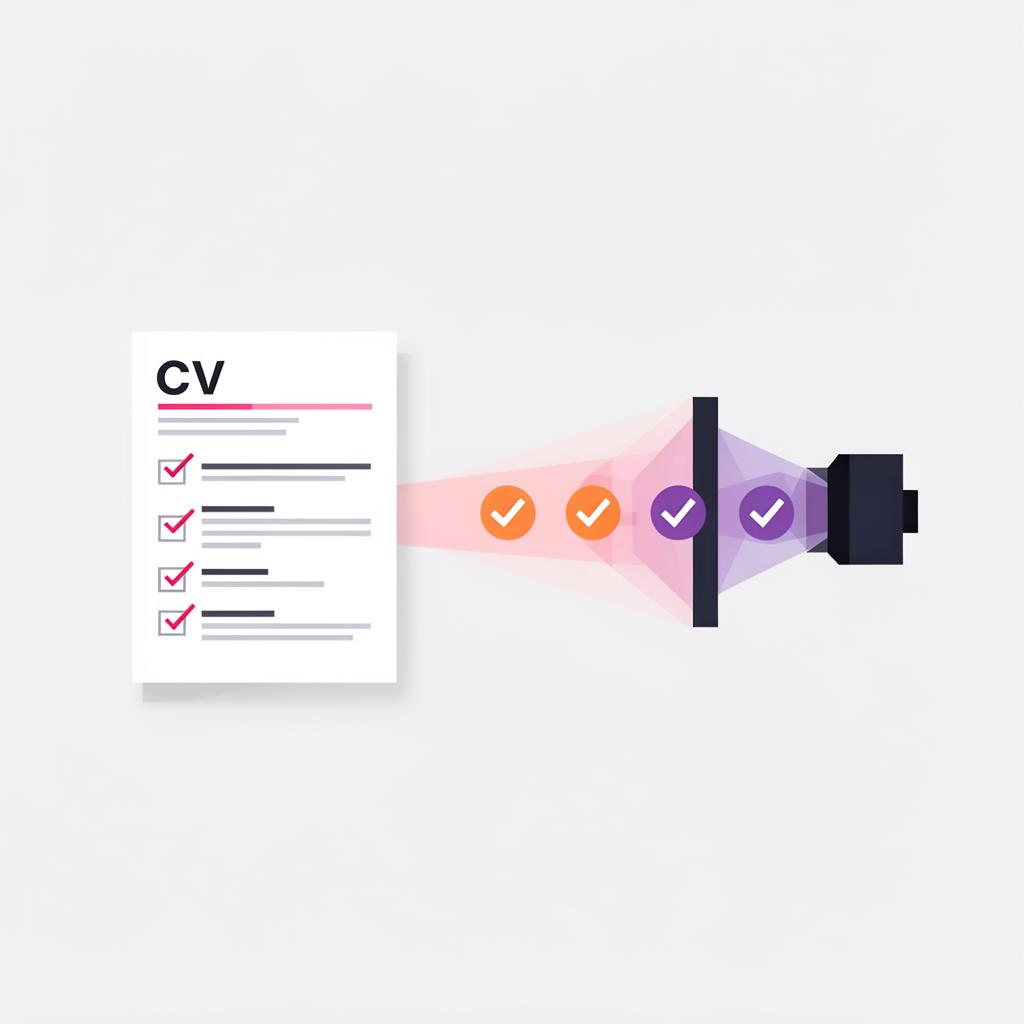
Recruiters scan CVs quickly to decide whether a candidate is worth progressing. I routinely decide within 20 to 45 seconds if a CV proceeds to a detailed read. During that scan I look for clarity, relevance and signs of impact.
- Clarity and structure. Standard headings, consistent dates and readable fonts let recruiters find essentials fast. If they cannot locate your current role, recent achievements or contact details immediately, the CV is at a disadvantage.
- Relevance over decoration. Recruiters favour templates that foreground experience, results and responsibilities rather than large photos, icons or multiple columns.
- Evidence of impact. We expect achievements quantified where possible, for example revenue growth, cost savings, headcount managed or process improvements. These replace vague claims such as \"responsible for\".
- ATS compatibility. Many hiring processes use applicant tracking systems. Templates that use tables, text boxes, unusual fonts or images often break parsing. That can mean the CV never reaches a human reader.
Recruiter Insight
Always tailor your application to the specific role. Generic submissions are the most common reason candidates miss out on interviews.
Why Candidates Struggle to Choose the Right CV Example
There are a few recurring reasons candidates pick poor examples. I see the same errors repeatedly across sectors and seniority levels.
- Polished look, poor substance. Templates with heavy design can mask a lack of clear achievements. Candidates assume visual polish compensates for weak content. It does not.
- Copy-and-paste descriptions. Using example phrasing without adapting it to your actual duties or outcomes produces generic CVs. Hiring managers notice when a CV could describe anyone.
- One-size-fits-all format. Using the same CV for every application ignores role differences. A product manager CV should emphasise outcomes and stakeholder management, whereas a financial analyst CV should foreground models, reporting and metrics.
- Confusion about profile, skills and achievements. Candidates often cram a profile full of buzzwords, list skills without context, or place achievements where they are unlikely to be seen.
Practical Advice: How to Use CV Examples and Templates Properly
Use examples as a structural guide, not a script. The right template supports your story and makes evidence easy to find. Follow these practical steps I give candidates every week.
- Choose a clean layout. Use single column, clear section headings and consistent date formats. That helps both humans and ATS to parse your CV.
- Prioritise relevance. Put the most role-relevant experience on the first page. If a recent project is directly related to the role, summarise it in the profile or top of the experience section.
- Tailor the professional profile. A short professional profile should explain what you do, your strongest achievement or outcome, and what you are seeking next. Replace template filler with one strong claim and supporting metric.
- Use achievement-led bullet points. For each role, lead with the result, then explain what you did and how. For example: \"Reduced supplier costs by 12% within 12 months through renegotiation and consolidating vendors.\"
- Keep it ATS-friendly. Avoid images, tables, text boxes and unusual fonts. Use standard headings such as \"Professional Profile\", \"Work Experience\", \"Education\" and \"Skills\".
- Adapt by seniority. Entry-level CVs should include internships, placements and academic projects with clear outcomes. Mid-career CVs should focus on ownership, scale and measurable results. Senior CVs must show strategic impact, board or client-level engagement and leadership outcomes.
See how your CV performs with recruiters
Upload your CV for a free review and get a score out of 100 based on ATS and recruiter expectations.
Real-World Examples of CV Formats That Perform Better
I will set out three short examples to show how format and wording change outcomes.
- Simple professional layout that helps recruiters. Single column, name and contact at the top, a two-line profile, five to seven bullet points for the current role with two quantifiable achievements, then previous roles in reverse chronological order. This layout lets me find recent outcomes in seconds.
- Poor modern template. Multiple columns with icons and a sidebar that contains years of experience and soft skills. The sidebar pushes recent job descriptions onto the second page, meaning I cannot see your last employer quickly. I often discard such CVs because the essential evidence is obscured.
- Same experience, weak versus strong presentation. Weak: \"Managed sales team, improved processes and supported clients.\" Strong: \"Led a team of seven sales executives to increase regional revenue by 28% year on year, standardising pipeline reporting to reduce forecast variance from 18% to 6%.\" The strong version uses numbers and specific actions, which make the candidate memorable.
Summary and Recruiter Insights
A strong CV template supports content rather than distracts from it. Templates are tools for structure, not shortcuts for content. Recruiters shortlist candidates who present clear, relevant evidence of impact in a readable format.
From my experience, the CVs that secure interviews are the ones where the candidate has adapted an example to their story, quantified outcomes and placed the most persuasive evidence where it will be seen first. Conversely, the most common reason a CV is rejected early is not lack of experience, but unclear presentation that hides the experience.
- Lead with impact. Begin bullet points with the result then explain how you achieved it. This flips the CV from duties to outcomes, which we value most.
- Audit for visibility. Before applying, open your CV in plain text. If the key points disappear or are jumbled, the template will break in ATS or when viewed by a recruiter.
Common Mistakes
Style over readability. Complex layouts or split columns look modern but slow down scanning. Use style to aid reading, not to impress.
Leaving placeholder text. Candidates sometimes forget to replace example text or list generic duties. Always replace placeholders with real responsibilities and outcomes.
Vague statements instead of measurable achievements. Phrases such as \"improved performance\" are meaningless without scale or metric. Quantify where you can.
Failure to tailor to the job description. Sending the same CV to every role reduces relevance. Mirror the language of the job where it genuinely fits your experience.
Overloaded design elements. Icons, coloured blocks and photos can confuse ATS and distract the recruiter. Keep visuals minimal and purposeful.
Actionable Checklist: How to Select and Improve a CV Template
- Choose a clean, single-column layout with clear headings.
- Place your most recent and relevant experience on the first page.
- Replace any template placeholder text with role-specific content.
- Write achievement-led bullet points using numbers, percentages or timelines.
- Include keywords naturally from the job description, without stuffing.
- Avoid tables, text boxes, images and unusual fonts to preserve ATS compatibility.
- Keep the professional profile concise, evidence-based and role-focused.
- Test readability by asking someone unfamiliar with your field to explain what you did and what you achieved.
See how your CV is likely to be assessed in a competitive market.
Upload your CV and receive a structured recruiter review with a clear first read on positioning and fit.
See how your CV is likely to be assessed in a competitive market.
Upload your CV and receive a structured recruiter review with a clear first read on positioning and fit.