
In this article
Candidates ask how long a CV should be and get told two pages. Recruiters sending that CV to a client get no advice at all, and the question is different. The candidate's CV has to survive an applicant tracking system and a stranger's first glance. The version you send has a reader who already trusts you, a note from you above it, and one decision to support: interview or not. That changes the answer.
Here is how I decide, role by role, how much of a candidate's CV a client should see.
The honest answer
As long as it needs to be for the client to make the decision, and not a line longer. For most roles that is two pages. For a senior, technical or project-based career it is three, occasionally four. For a graduate or someone early in their career it is one, maybe one and a half. A page count is a symptom, not a target: a two-page CV that leaves out the one project the client cares about is too short, and a two-page CV padded with duties is too long.
What a client will not do is read page five. If the candidate's own CV runs to six pages, which happens with contractors, academics and anyone who has been told to list every duty, the client version has to be built from it, not just reformatted.
Rules of thumb by level
- Graduate and early career: one to one and a half pages. Education first if it is the strongest thing on the page, then placements, part-time work and anything that shows reliability.
- Professional, five to fifteen years: two pages. The last two or three roles carry the detail; everything earlier is a title, an employer and dates.
- Senior and executive: two to three pages. Scope matters here: team size, budget, markets, board exposure. Keep the achievements, cut the duties.
- Technical, engineering and IT: three pages is normal, because the client needs the systems, the methods and the projects, and a skills section that can be scanned.
- Contractors and interims: as long as the assignment history needs, with the last five years in detail and older assignments as one line each.
Clients in the UAE often expect more detail than UK clients, and sometimes ask for nationality and visa status. Put those in your recruiter's notes if the client requires them and your policy allows it, rather than on the CV itself, and keep the CV to the same length rules.
Recruiter Insight
Read the client's job description before deciding the length. If it lists four things that matter, the CV needs to show those four clearly and can be short on everything else. The notes above the CV can point the client straight to them.
What to trim
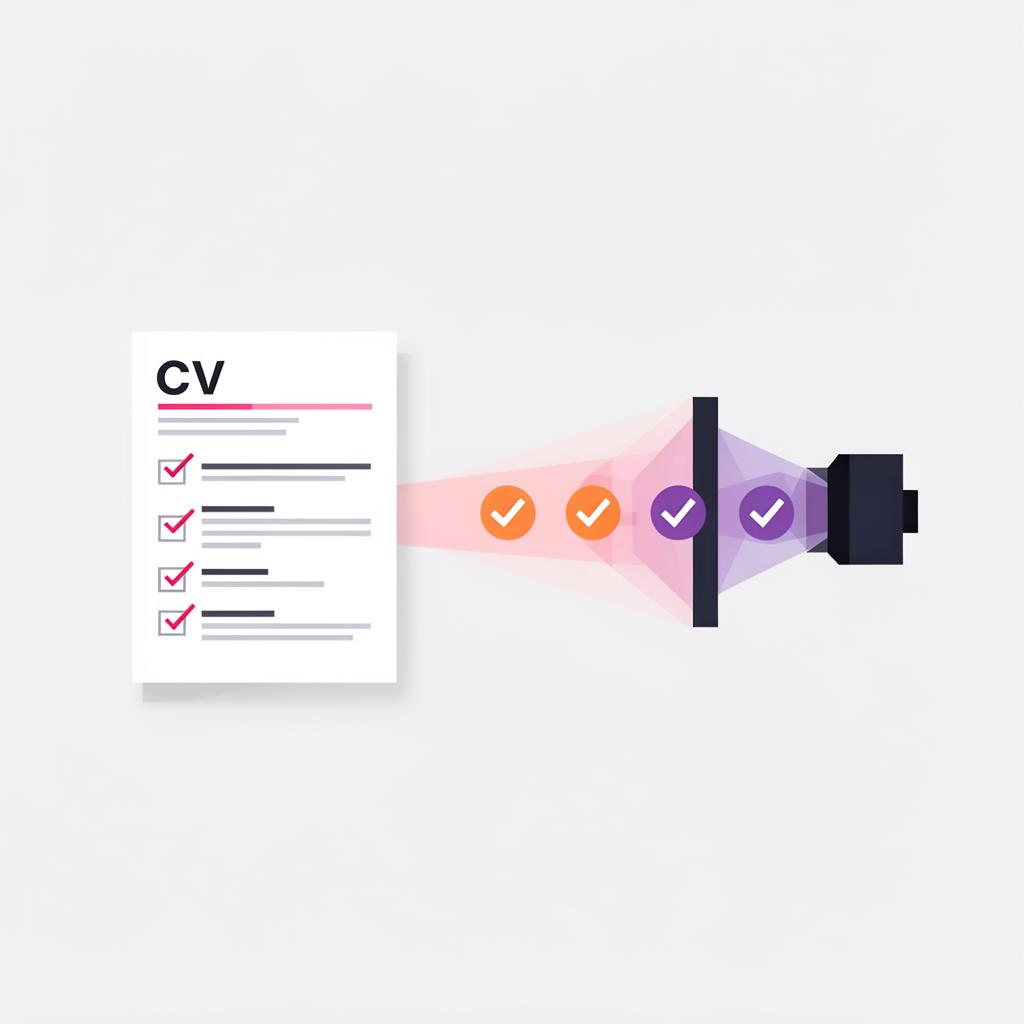
Cutting a long CV down to the client version is about removing weight, not evidence. In order, this is what goes.
- Duties written as a list of responsibilities. "Responsible for managing a team" is not information. The achievement that followed is.
- Roles older than ten to fifteen years. Title, employer, dates, one line. The client needs to see continuity, not the detail of a job from 2008.
- Repeated skills. The same software listed under every role and again in a skills section. Once, in the skills section, is enough.
- A long profile. Four lines at most, and if your recruiter's notes already say why the candidate fits, the profile can be shorter still.
- References, hobbies and the personal details block. Out, for reasons that have nothing to do with length.
- Training courses with no bearing on the role. Keep the qualifications and the certifications the client will search for.
What never gets cut
Dates and every role, including the short ones. A client version with a six-month role removed to tidy the timeline has a gap in it, and the client will ask about the gap or, worse, assume the answer. Qualifications and professional memberships. Anything that changes the story: a step down, a career change, a return after a break. Trim the detail around those, never the facts.
And the candidate's own wording for whatever stays. Shortening is choosing which of their sentences the client sees. It is not rewriting the sentences.
Put your next shortlist in your own template
The Glo CV Formatter copies any candidate CV into your branded Word and PDF template, word for word, and checks nothing was dropped. First 5 CVs free.
Recruiter Insight
If you find yourself writing a long note to explain a short CV, the CV is too short. If you find yourself writing nothing because the CV says it all, the CV is probably too long. The note and the CV should share the work.
Let the recruiter's notes do the work
The reason an agency CV can be shorter than the candidate's is sitting above it. A four-line note that says why this person fits the brief, what they are earning and expecting, when they can start and when they can interview replaces a cover letter, a long profile and half the duties. It is also the part of the document the client reads first and remembers. Write it per role, not per candidate; the same person fits two briefs for two different reasons.
Page breaks and the second page
Length is also about where the pages end. A CV that runs to two pages and four lines is a three-page CV with a bad last page, and a client flicking through a pack notices. Either trim to fit or let it run to a proper third page. A heading at the foot of a page with its content on the next, or a role split across two pages, is a formatting job: keep headings with their content, and keep each role together where you can.
When a CV is reformatted into a single-column template the length usually changes, often by half a page, because two-column designs hide how much text there is. Check the page count after formatting, not before. This is one of the things the Glo CV Formatter handles as part of the job: the candidate's text goes into your template with consistent spacing, you can switch sections off for a particular client, ask for a shorter profile that is shown to you for approval before it is used, and see the page count in the preview before you send.
When the client's format wins
Some clients have their own template, a one-page summary form, or a portal that parses the CV into fields. When they do, their format wins, and your job is to fill it accurately from the candidate's full CV and attach the full version where the process allows. A beautifully formatted two-page agency CV is no use to a client whose process cannot accept it.
Ask on the first assignment with every new client: full CV or summary, PDF or Word, your template or theirs, and anything they want above the CV. Write the answer into your standard against the client's name, so the next consultant on their account sends the right thing first time.
Two pages is a fair default. The real rule is that the client should be able to decide on an interview without turning back a page or ringing you with a question. If you want to see how long a candidate's CV comes out in your own template, with the trimming and the notes box built in, the first five CVs through the Glo CV Formatter are free.
Common Mistakes
Cutting to a page count instead of to the decision:
the two pages that lose the one project the client wanted.
Removing short roles to tidy the timeline:
which creates gaps the client will find.
Sending six pages because the candidate wrote six:
reformatting is not the same as editing for the client.
A profile and a recruiter's note that say the same thing:
use one of them.
Not checking the length after formatting:
a tidy two-column original becomes two pages and four lines in a single column.
Ignoring the client's own template:
however good yours is.
Checklist
- Length decided from the client's brief, not from a page target
- Last two or three roles in detail, earlier roles as one line each
- Duties cut, achievements kept, repeated skills listed once
- Every role and every date still present
- Qualifications and memberships intact
- Recruiter's notes written for this role: fit, salary, availability, interview times
- Page count checked after formatting, no orphaned headings or split roles
- Client's own format used where they have one, with the full CV attached if allowed
Every CV your agency sends, in your own template, in minutes.
Upload any candidate CV. It is copied across word for word, checked line by line against the original, and ready to send as Word or PDF. First 5 CVs free.
Every CV your agency sends, in your own template, in minutes.
Upload any candidate CV. It is copied across word for word, checked line by line against the original, and ready to send as Word or PDF. First 5 CVs free.